
Confidence Building Resources for Real Self-Belief
Confidence is not just “believe in yourself” written on a poster. That kind of advice sounds nice, but it usually disappears the moment life gets serious. Real confidence is built on something stronger: knowledge, experience, self-respect, repeated action and the quiet proof that you can handle more than you thought.
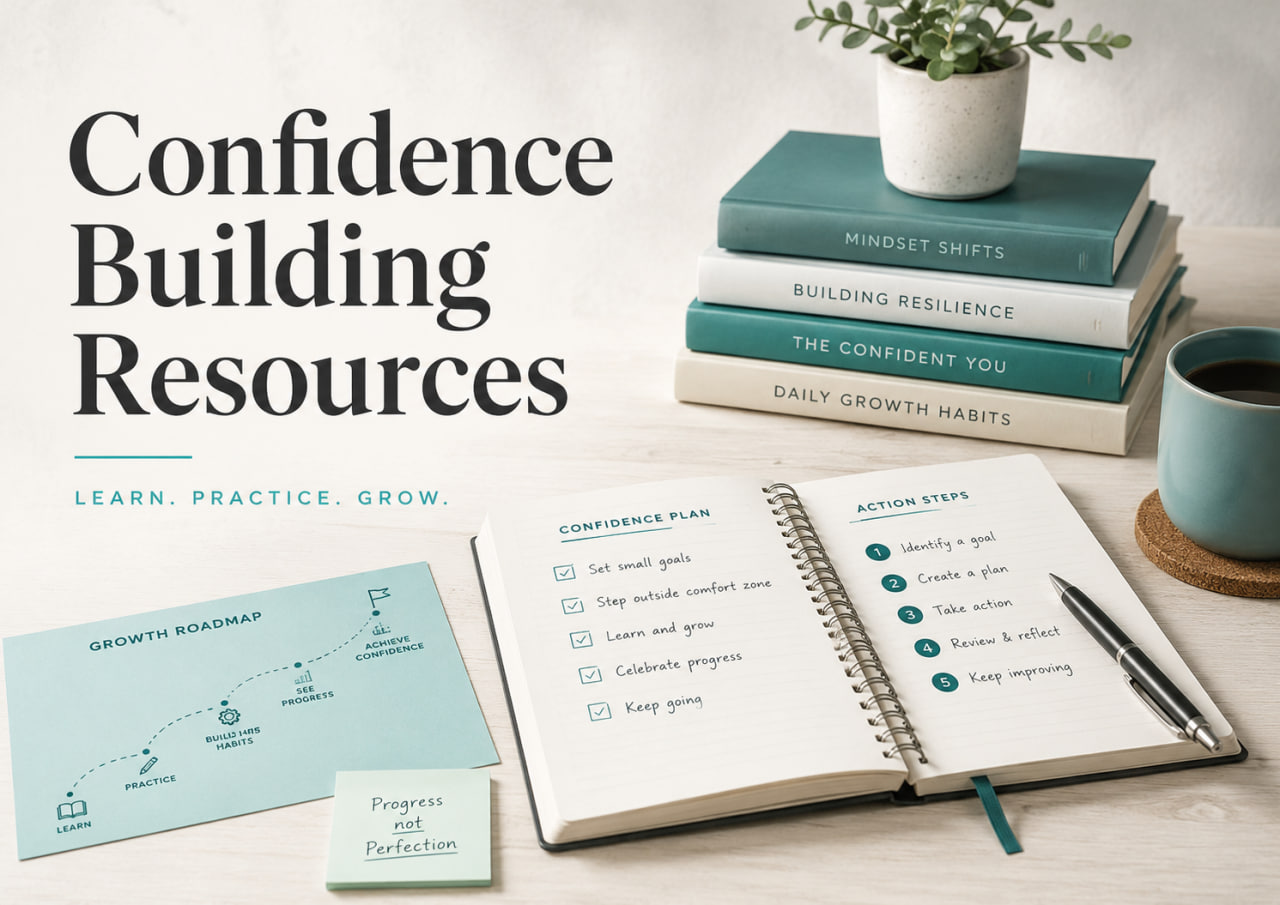
This page is for people who want confidence that can actually hold up in real situations: work, interviews, difficult conversations, new responsibilities, decisions, visibility, change. Not fake confidence. Not pretending. Something more grounded.
Confidence grows when you have a foundation. Books can give you language. Experience gives you evidence. Knowledge gives you options. Practice makes your body less shocked by new situations. And the more you understand yourself and the world around you, the less easily you are shaken.
If you want practical exercises to support this work, the page on personal development exercises gives you a useful place to start.
What actually gives a person confidence?
Confidence does not come from nowhere. Some people look naturally confident, but even then there is usually a base underneath it. They have done something many times. They have learned enough to speak without guessing. They have survived mistakes. They know what they bring to the table.
That is why confidence becomes stronger when you become more capable. Reading, studying, observing, practising, failing, trying again — all of this matters. When you become smarter in a real way, not just by collecting quotes, you start trusting your own judgement more. You do not need to be the loudest person in the room when you know you have substance.
Simple truth: confidence is easier when you have evidence. If you do not have evidence yet, you build it.
This is why knowledge is not separate from confidence. A person who reads, learns, asks better questions and understands their work or life more deeply starts moving differently. Not because they suddenly became perfect, but because they are less empty-handed.
The foundation: books, knowledge, experience and action
Books do not automatically make someone confident. Plenty of people read and still avoid action. But good books give you frameworks. They help you name things you have felt for years. They show you that other people have dealt with the same fears, habits and doubts.
Knowledge does something similar. When you understand a topic, you stop feeling like you are bluffing. You can answer, explain, compare, decide. You may still feel nervous, but nervous is not the same as unprepared.
Experience adds the part that theory cannot give. You learn what happens when things go wrong and you survive it. You learn that one awkward conversation does not end your life. You learn that you can be embarrassed and still continue. That is a serious kind of confidence.
- Books give you language, structure and perspective.
- Knowledge gives you options and makes situations less confusing.
- Experience gives you proof that you can handle reality, not just imagine it.
- Action turns confidence from an idea into something your body recognises.
For deeper reading around habits, vulnerability, clear thinking and responsibility, the recommended books page fits naturally with this topic.
Confidence is not the same as always feeling ready
A common mistake is waiting until you feel confident before doing the thing. But confidence often comes after you begin, not before. You apply, then learn. You speak, then improve. You try, then adjust.
This does not mean jumping into everything blindly. Preparation matters. But there is a point where preparation becomes hiding. You read one more article, watch one more video, rewrite the same plan again, and still avoid the actual step.
A useful question: am I preparing because this will make me better, or am I preparing because action feels uncomfortable?
The answer does not need to be dramatic. Just honest.
Where confidence usually breaks down
Most people do not lack confidence everywhere. They lack it in certain situations. That matters, because it means you can work with it more precisely.
| Where confidence drops | What may be happening | What helps |
|---|---|---|
| Speaking in meetings | You may be waiting for the perfect thought before saying anything. | Prepare one clear point before the meeting and practise saying it simply. |
| Applying for better roles | You may be comparing your gaps to someone else’s highlight reel. | Write evidence of what you have already handled well. |
| Difficult conversations | You may be afraid of disappointing people or being misunderstood. | Write what you need to say before trying to say it perfectly. |
| Starting something new | You may be expecting yourself to be good before you have practised. | Let the first version be clumsy. That is how new skills begin. |
| Being visible | You may connect visibility with judgement, shame or pressure. | Start with small visibility: one idea, one post, one conversation, one application. |
Once you know where confidence breaks, you can stop treating it as a personality flaw. It becomes a situation to train for.
Build confidence by becoming more capable
There is nothing wrong with affirmations if they help you. But for many people, repeating “I am confident” does not work because part of them does not believe it yet. The better question is: what would make it easier to believe?
Often, the answer is capability. Learn the skill. Read the book. Ask the better question. Practise the conversation. Do the small version first. Get feedback. Repeat.
When you know more, you stand differently. When you have practised, you breathe differently. When you have evidence, you stop needing to convince yourself from nothing.
Try this: choose one area where you want more confidence. Then ask, “What knowledge or experience would make me feel less empty-handed here?”
A practical way to grow confidence over four weeks
You do not need a huge reinvention. Four focused weeks can already give you more proof than you had before.
Write down what you have handled, learned and completed. Include small things. They count more than you think.
Pick one area where you feel unsure. Read, ask, research, practise. Do not try to master everything. Just reduce the fog.
Speak once in a meeting, apply for one role, ask one question, share one idea. Make it real, but manageable.
Do not only ask whether it went perfectly. Ask what you learned, what felt easier, and what you can repeat.
Confidence also needs self-respect
You can know a lot and still struggle if you keep speaking to yourself with contempt. Confidence is not only built by doing more. It is also built by not abandoning yourself every time something is hard.
Self-respect looks ordinary. Keeping a promise to yourself. Preparing properly. Saying no when you mean no. Admitting you need help. Resting before you completely crash. These things may not look dramatic, but they tell your brain: I can trust myself.
If fear of judgement is a big part of the problem, the TED Talks resources page can help, especially the talks around vulnerability, presence and courage.
- Stop calling yourself lazy when you are actually overwhelmed.
- Stop dismissing skills just because they feel natural to you.
- Stop waiting for permission to take your own growth seriously.
- Stop treating one mistake like a full personality report.
What confidence feels like in real life
Real confidence is usually quieter than people expect. It is not always walking into a room like you own it. Sometimes it is asking the question even though your voice shakes a little. Sometimes it is applying even though you are not sure. Sometimes it is saying, “I need time to think,” instead of pretending to know.
It is also the ability to recover. A confident person can still feel embarrassed. They can still get rejected. They can still have bad days. The difference is that they do not turn every uncomfortable moment into proof that they are not enough.
Confidence is not never doubting yourself. It is learning not to hand your whole identity over to doubt.
Small habits that make confidence stronger
Confidence grows faster when your daily behaviour supports it. Small habits are not magic, but they create evidence. They show you that you are someone who follows through.
- Read a little every week, especially around topics that affect your work and decisions.
- Keep a short record of things you handled well.
- Practise explaining your ideas out loud, not only in your head.
- Ask for feedback before you feel completely ready.
- Do small uncomfortable things often, so discomfort stops feeling like danger.
- Spend time with people who make effort feel normal, not embarrassing.
None of these habits will make you fearless overnight. That is not the goal. The goal is to become more solid over time.
The point is progress, not perfection
Perfection is a terrible foundation for confidence because it is too fragile. One mistake and the whole thing breaks. Progress is better. Progress lets you be human and still keep moving.
The more you learn, the more you understand. The more you understand, the more choices you have. The more you act, the more evidence you collect. That is how confidence becomes real. Not loud. Not fake. Real.
Start where you are. Read something useful. Practise one skill. Take one honest step. Then repeat. That is not glamorous, but it works.
Ready to build confidence with support?
If confidence is something you want to work on more seriously, coaching can help you understand what is holding you back and turn that into practical next steps.
Get in Touch